2019-07-16
 Ramallah

MUSAWA and the PALESTINIAN ANTI-CORRUPTION COMMISSION Explore Avenues of Collaboration
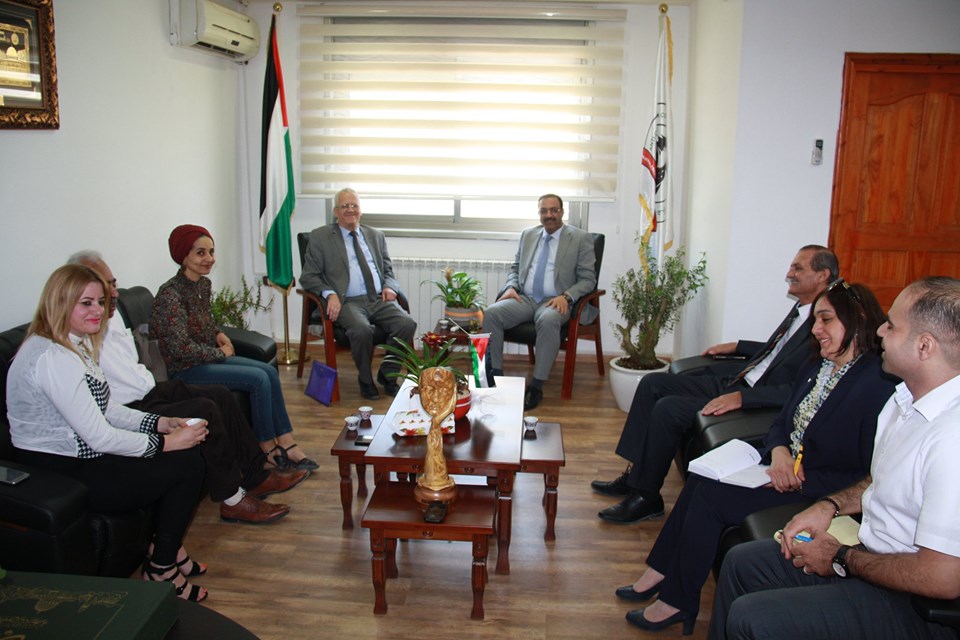
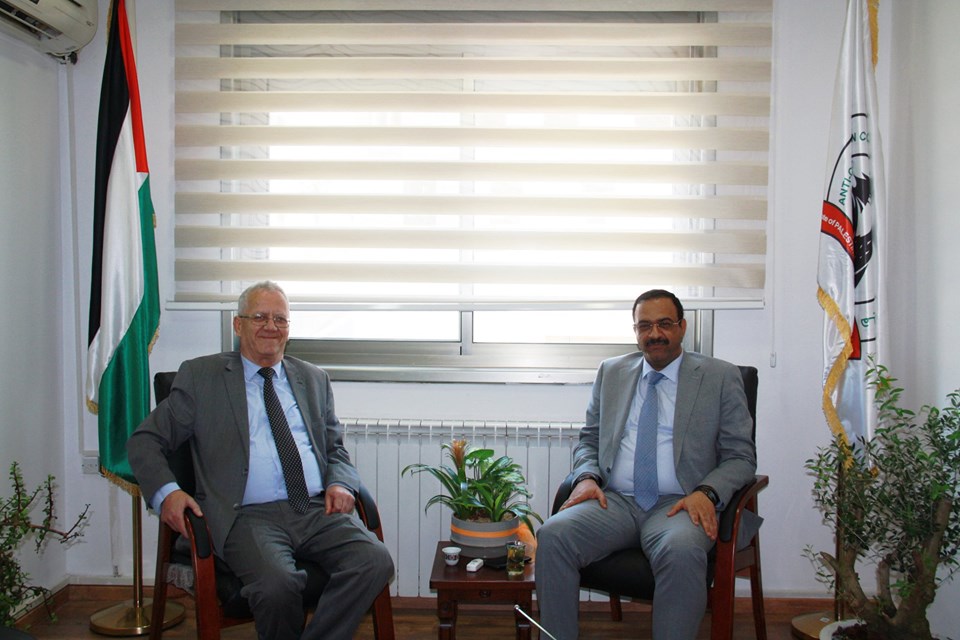
A meeting between MUSAWA- The Palestinian Center for the Independence of the Judiciary and the Legal Profession, represented by it’s the president of its BOD, Dr. Taleb Awad, its BOD member, Adv. Yousuf Bakhtan, the General Director, Adv. Ibraheem Barghouti, the Executive Director, Ahlam Tarayra, and its GA member, Adv. Shereen Shaarawi, and the Palestinian Anti- Corruption Commission, represented by its president, Dr. Ahmad Barrak, with the attendance of the head of the legal department at the commission, Adv. Rasha Amarneh, the head of the Planning and Development department at the commission, Adv. Ziad Sarahneh was held yesterday at the commission’s headquarter in Ramallah, during which, MUSAWA has reiterated that it is a professional and an impartial organization that shall enjoy its right to monitor the performance of the justice system, including the performance of the Palestinian Anti- Corruption Commission itself.
As a member at the Arab Anti-Corruption and Integrity Network, MUSAWA believes that the Palestinian Anti- Corruption Commission must respond to the calls of issuing a legislation governing the gifts presented to the public employees, including ministers, by depositing them at the public treasury and identifying the aspects of dealing with them as demanded in the memo sent by MUSAWA to the Palestinian Anti- Corruption Commission in this regard.
On the other hand, MUSAWA asserted the commission’s responsibility to excursive its powers concerning what was reported on unlawfully raising the salaries of ministers and those legally assimilated to their status, to recover the money they have unlawfully received, to freeze the decision on raising their salaries, as it has no legal basis, in addition to revising the commission’s law to ensure its conformity with the provisions of the United Nations Convention against Corruption, to ensure the proficiency of the institutional building of the commission, to strengthen its social role, and to activate its role in combating corruption in governance and management, regardless of the status of the body that commits it.
MUSAWA has also urged the Palestinian Anti- Corruption Commission to play its role in preventing the functional immunity from becoming an impediment of holding the corrupt accountable, to prevent impunity, to stop pardoning those convicted of committing any kind of corruption crimes, and to activate the tools of protecting witnesses and reporters both physically and functionally in a way that encourages them to report corruption crimes.
Regarding the right to access to information, MUSAWA demanded the Palestinian Anti- Corruption Commission to issue the special legislation governing the right to access to information, away from the security approach, that meets the international covenants and agreements signed by Palestine and to which it is bound, especially the International Covenant on Civil and Political Rights.
Finally, MUSAWA demanded the commission to respond to the memos addressed to the commission and to take the needed legal action in its regard without more delays. In another context, MUSAWA called the commission to activate its role in the national team to prepare Palestine’s reports on corruption (The Self-evaluation team), while reiterating its willingness to contribute to raise societal awareness on combating corruption, especially in the Gaza Strip, as the commission does not have an office there, pointing out the importance of serious dealing with the suspicions of corruption at all authorities, especially the executive and judicial ones.
Both parties agreed on signing a memorandum of understanding by the end of this month, to embody their interest in joint cooperation that respect the independence of both parties, especially that MUSAWA is dedicated to combat corruption at the justice system while respecting human rights and strengthening the good governance rules, the state sovereignty based on the principles of the rule of law and separation between authorities.
Share this post:


Have you been a victim or a witness of a right violation that requires the attention of MUSAWA? Let us know!

+970 2 2424870
+970 8 2880772